Legal VLT by Window, Why the Film Label Isn't the Final Reading, and the Medical Exemption
Yes, window tinting is legal in Wisconsin, within limits. Front side windows must let at least 50% of visible light through, and rear side windows and the back window must let at least 35% through, measured with the glass and film together. Film on the side and rear windows cannot be reflective, and windshield film is allowed only above the manufacturer's AS-1 line.
The catch is in that phrase "glass and film together." Wisconsin's limits describe the finished window, not the number printed on the film, so a shade that sounds legal can still fail an officer's tint meter. Below is a plain-language guide to Wisconsin tint law, what each VLT percentage means on each window, and how to choose window tinting that stays on the right side of the rules.
Wisconsin Tint Law at a Glance
- Windshield: film only above the manufacturer's AS-1 line (the mark etched near the top of the glass) and outside the critical viewing area. If the windshield has no mark, no film is allowed.
- Front side windows: at least 50% VLT, glass and film combined.
- Rear side windows: at least 35% VLT, combined.
- Rear window: at least 35% VLT, combined. If it lets through less than 60%, the vehicle needs outside mirrors on both sides.
- Reflective film: not allowed on the side or rear windows.
- Tolerance: officers must allow 3% when measuring.
- Factory tint: glass tinted by its manufacturer and installed when the vehicle was built is legal as it came.
These rules come from Wisconsin Administrative Code Trans 305.32 and Trans 305.34, and they apply to cars, SUVs, pickups and vans alike. This is a plain-language summary, not legal advice.
What VLT Percentage Means in Wisconsin
VLT stands for visible light transmission: the share of visible light that passes through the window. A higher number means a lighter window. A 50% window lets half the light through; a 5% window, often called limo tint, lets almost none through.
Wisconsin sets a minimum, not a maximum. You can always go lighter than the limit. You cannot go darker. The rule tells officers to allow a 3% tolerance, which is generally read as 47% on the front side windows and 32% on the rear side and back windows. Don't plan a tint job around the tolerance.
The Number on the Film Is Not the Number on the Meter
This is where most people get caught. Untinted car glass is not perfectly clear. Federal safety standards only require windows needed for driving visibility to let through at least 70% of light, and plenty of factory glass sits somewhere between that and fully clear.
When you add film, the two layers stack. The finished reading is roughly the glass's VLT multiplied by the film's VLT. Two examples, using illustrative numbers and assuming the film's own VLT matches its label:
- 50% film on front glass that passes 85%: about 42.5% combined. That is below 47%, so it fails, even though the film itself is labeled 50%.
- 35% film on rear glass that passes 90%: about 31.5% combined. That misses 32% by a hair.
Some brands rate shades on a reference glass instead, so the label alone never settles it. On many vehicles, the darkest film that stays legal is lighter than the limit printed in the law. The only reliable way to know is to meter your glass before the film goes on, then choose a shade that keeps the finished window above the line.
Legal Window Tint Darkness by Window
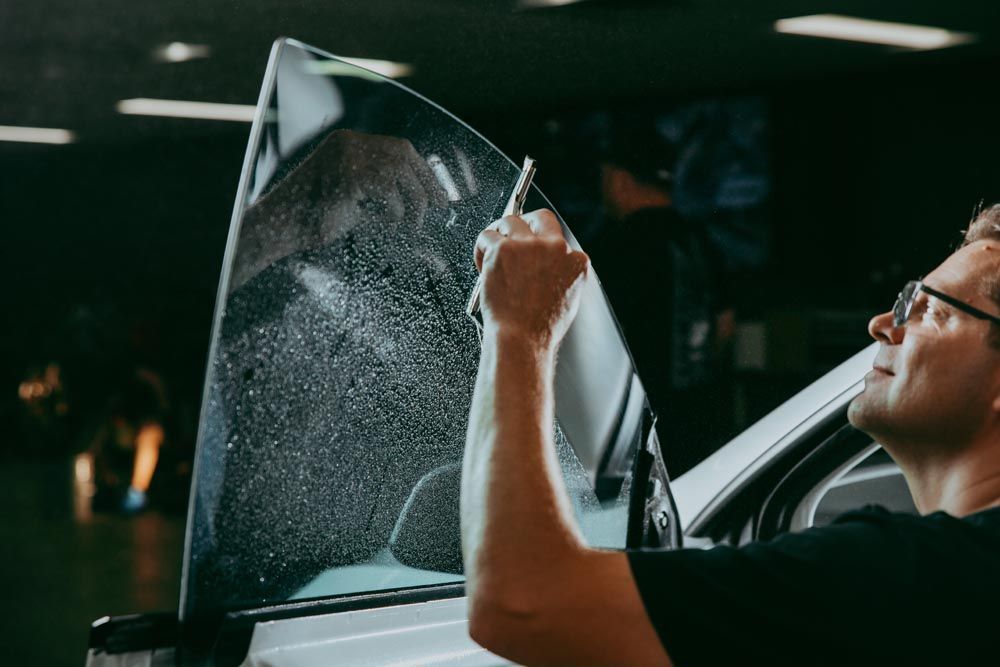
Window film commonly comes in shades like 5%, 20%, 35% and 50%. Here is how they line up with Wisconsin's rules:
- 5% and 20%: darker than Wisconsin allows on any side or rear window once applied, regardless of the glass underneath.
- 35%: on the rear side and back windows, it lands right at the line, so the meter decides. On the front side windows, it is only allowed under the medical provision.
- 50%: the only common shade that can be legal on the front side windows, and only on glass clear enough to keep the total at or above the limit.
- Windshield strip: a band of film across the top of the windshield is allowed, as long as it stays above the AS-1 mark and outside the critical area.
SUVs, Pickups and Vans: Same Rules, Different Glass
Some online tint charts say Wisconsin has no limit on the rear windows of SUVs and vans. The rule text does not support that. Trans 305.32 sets the same 35% minimum for rear side and back windows with no separate category for trucks, SUVs or vans.
The confusion likely comes from factory privacy glass. Federal rules generally do not set a light transmission minimum for the rear glass of trucks and multipurpose vehicles, so many SUVs leave the factory with dark rear windows. Wisconsin allows that glass as installed because the glass manufacturer tinted it. Add film on top, though, and the film rule applies to the combination. If the privacy glass already reads below the limit, any film over it puts the window out of compliance.
One more detail for used-car buyers: tint added by a dealership is not factory tint, so the film limits apply.
The Medical Exemption in Wisconsin
Wisconsin allows darker front-side windows for medical reasons. With a recommendation from a physician or a Christian Science practitioner treating the owner or an immediate family member, the front side windows can go as dark as 35% VLT. The film still cannot be reflective.
The rule requires a written statement kept in the vehicle at all times. It has to identify the patient, the condition, whether the condition is temporary or permanent, and the vehicle's make, model, year and VIN. The film must come off when the vehicle is sold, when that person no longer lives in the owner's household, or when a temporary condition ends.
What Happens If Your Tint Is Too Dark
Officers measure total light transmission, and the rule tells them to allow a 3% tolerance when they do. Milwaukee police representatives point to night visibility and officer safety as the reasons for the limits. Depending on the stop, a driver may get a written warning or a citation. Amounts vary: a Dodge County law enforcement notice lists a forfeiture of $175.30 and 0 to 3 demerit points, while Milwaukee citations carried a $98.80 fine. Milwaukee police cited 168 drivers for tint in 2021 and 113 in 2022, according to TMJ4.
Some shops will install darker film if the customer signs a waiver. A waiver protects the shop. It does not make the tint legal, and the shop is not the one getting pulled over.
If Your Current Tint Is Too Dark
This comes up most with used cars. Start by having each window metered so you know the actual readings, not a guess from how dark the glass looks.
- Front windows too dark, rear windows fine: replace only the front film with a lighter shade. You do not have to redo the whole car.
- Film over factory privacy glass: remove the film. The glass underneath is legal as installed.
- A qualifying medical condition: get the written statement the rule requires and keep it in the vehicle, and make sure the front windows still read at least 35%.
Old film can be stripped and replaced with a legal shade. Removal does add time to the job, so mention the old tint when you book.
Want a Cooler Car? Look at Film Type, Not Just Darkness
Many drivers ask for dark tint when what they really want is less heat and glare. Darkness is not the only lever for heat. Tidy Car's nano-ceramic film rejects more infrared heat than its carbon film, so picking ceramic at a legal shade is a better route to a cooler cabin than chasing an illegal one. Both films also provide UV protection for passengers and interior materials.
If privacy is the goal on an SUV, check what the factory glass already does before paying for film. You may already have more privacy in the back than film could legally add.
Questions to Ask Before You Tint
- Will you meter my glass before recommending a shade?
- What will each window read once the film is on?
- Is the film non-reflective?
- Where is the AS-1 mark on my windshield, and will the strip stay above it?
- Does my vehicle have factory privacy glass, and what does it read now?
Frequently Asked Questions
What is the darkest legal tint in Wisconsin?
The finished window must read at least 50% on the front side windows and at least 35% on the rear side and back windows, with a 3% tolerance. With a qualifying medical statement, the front side windows can go to 35%.
Is 35% tint legal in Wisconsin?
On the rear side and back windows, yes, if the finished window reads 35% or higher (32% with tolerance). Because the glass adds its own shade, 35% film often lands right at the line. On the front side windows, 35% is only allowed under the medical provision.
Is 20% tint legal in Wisconsin?
Not as aftermarket film on any side or rear window. A 20% film reads far below the 35% minimum once it is on the glass.
Can you tint your windshield in Wisconsin?
Only the area above the manufacturer's AS-1 mark and outside the critical viewing area. If the windshield has no mark, no film is allowed on it.
Where can I get window tinting in Sheboygan?
Tidy Car tints windows at 2619 Superior Avenue in Sheboygan, serving drivers across Sheboygan County and nearby towns like Kiel, Manitowoc and Two Rivers. Most jobs take a few hours; here is more on how long it takes to tint car windows. The shop is open Monday to Friday, 8 a.m. to 4 p.m., with weekends by appointment.
Tint That Fits Wisconsin's Rules
Tidy Car has been Sheboygan's most trusted vehicle care and protection shop since 1983. We will talk through which shade fits each window under Wisconsin's rules before any film goes on, and both our carbon and nano-ceramic films are backed by a lifetime warranty. You can read what local drivers say about the work.
Call (920) 452-9322 or request a window tint quote to get started.
RECENT POST